8. Learn a New Language And Gain New Knowledge Source

Have you ever tried googling something in Google using different languages?
You might be surprised that the results shown are not the same, at all. Take the term “Happy” for example, when it is typed in the Google search engine, the results displayed are mostly related to a singer, Pharrell Williams and his song “Happy”. Whereas if we translate “Happy” into Chinese, which is “开心“ (pronounced as /kāixīn/) and put this into Google search, the first thing appeared are different images that translates happiness, or put it in the urban slang, is called happiness memes, along with some quotes of happiness in Chinese (at least that’s what I saw when I tried out this experiment).
From the comparison above show that the results Google displayed varies depending on what is the input language. Imagine when this advantage is being used by a multilingual student for assignments or researches, this student will gain the upper hand over a monolingual student academically as the information obtained by a multilingual set a wider perspective and a deeper understanding where a monolingual student cannot achieve.
9. Bridging The Gap Of Language Barrier And Cultural Differences.
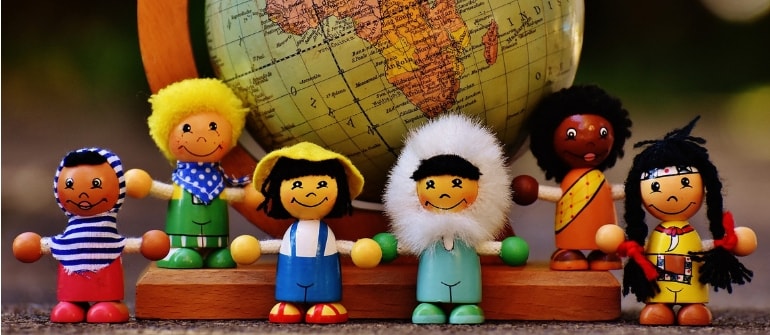
In this globalized era, it is common for us to meet people from all walks of life, where various people from different cultural background might bump into some differences when communicating with each other.
In the book “Beyond Culture” by Anthropologist Edward T. Hall, introduced the concept of high and low context culture, a distinct communication that happens between different culture.
In plain terms, people from high context culture communicate not only through language, but they also rely on their body language, the tone of voice, facial expression, intuition and feelings to understand what others are trying to say. As for low context culture, messages are communicated in a simple direct manner where people of this culture often have a low reliance on non-verbal communication.
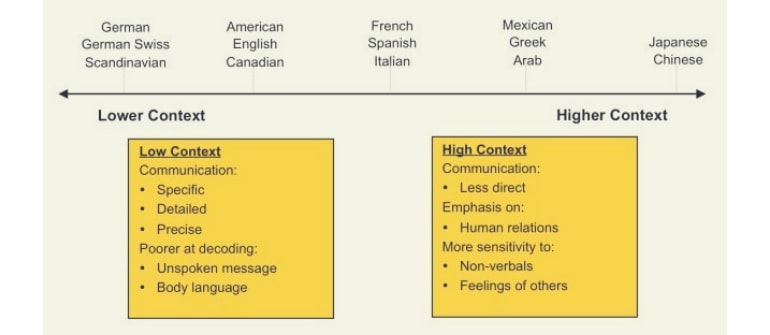
For instance, going out together with colleagues after work for a drink is common in Japan culture, in fact, it can be an unspoken rule in some companies. As Japan is considered as high context culture, many Japanese sees it as an important way to foster a good relationship or an opportunity to network with their colleagues. If the invitation is being turned down by mundane excuse like “I’m feeling tired today”, your colleagues or teammates might feel disrespected.
Whereas in German culture, work-life balance is treated seriously by Germans. Free time and vacations are respected by employers and colleagues, where you have the right to not pick up the phone call or read the email from your company during your vacation or off days. As Germany is considered as low context culture after work beer sessions are not seen as frequently as in Japan.
10. Delay The Brain From Ageing

A research by Canadian psychologist Ellen Bialystok and her teammates found out that bilinguals who show the symptoms of dementia were diagnosed 3-4 years later than the monolinguals. Particularly, monolingual patients were diagnosed on the average age of 75.4 years old, while bilingual at the age of 78.6 years old. It seems learning a new language helps to keep our mind sharp and slow the natural decline of our brain function as we grow older.
11. Gain Self-Confidence….And Might Save Your Life Too

Ever heard of the quote “One language sets you in a corridor life, two language opens every door along the way” by psycholinguist Frank Smith? You never know that one day, the language that you learn might just save your life. Remember how Amy Adams communicate with the aliens in the movie “Arrival”? You never know.
By the time you have finally decided to learn a new language, you are unconsciously setting a goal for yourself. Imagine once you are able to understand the language and use it for a conversation, with the big smile on your face, you will probably be thinking: “Yesss! I did it!”. That exhilarating feeling that you have on that moment, is the proof of the self-confidence you have just developed, congrats!
--
All and all, learning a new language can be beneficial in many aspects, whether is for yourself, for work, for your social life or for your family. As a philosopher, Ludwig Wittgenstein once said: “The limits of my language mean the limits of my world”. Which language shall you begin learning with?
Comments